Natasha (N-9) – WC seed nuts
Ordering 25 nuts or more? Enter code ORCHARD25 in your cart to pay just $1 each.
The variety
W.C. comes from Kentucky, the same state that produced Qing, and Michael Nave describes it as a possible sibling with similar nuts on a larger, more spreading tree. Like Qing it carries Allegheny chinquapin in its parentage alongside Chinese chestnut, so we do not call it a pure Chinese chestnut.
What drew our attention is storage. When Greg Miller stored nuts from dozens of cultivars, Liu came out best for resistance to blossom end rot and storage rots, and after a year's observation W.C. was the next one he named. We grow both.
It is also scarce. Nave lists W.C. among trees he rates highly but has not written up, simply because there is no consistent source of wood or nuts anywhere. It is not a variety you will find offered by nurseries, and we are glad to have it.
The tree
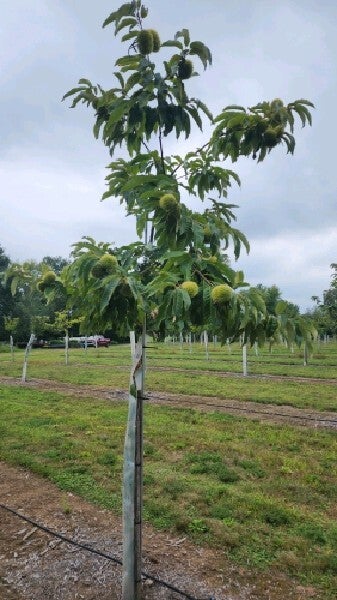
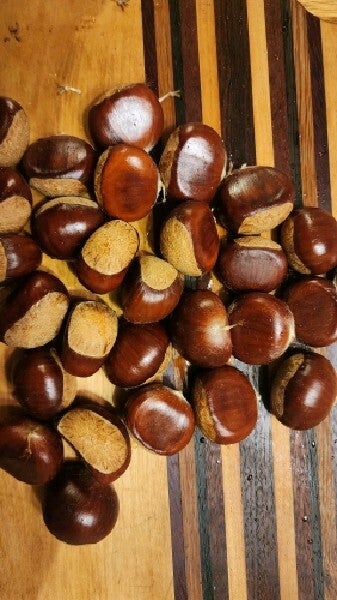
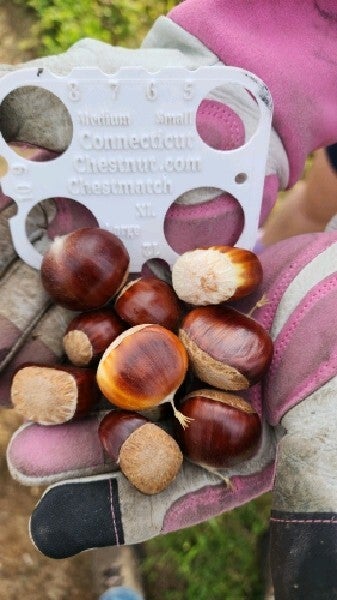
Natasha is a tall heavy producer of very high quality nuts, she isn't the biggest tree but she is one of Ellington's finest for sure. Glossy, well-filled, clean nuts with no splits, good size.
Form: Orchard
$1.25 per nut. Limit 10 nuts per mother tree per order for 2026, so more growers get a chance at each tree. Want more? Mix trees. Ordering 25 nuts or more? Enter code ORCHARD25 in your cart to pay just $1 each.
Preorder: shipped orders go out after November 15. Chestnuts are living seed, and holding them until the weather settles into steady cold keeps them from cooking in a warm mailbox or a delivery truck. Your card is charged when you order, and if anything goes wrong on our end, you get a full refund. Local? Choose Pickup at the Ellington Farmers Market at checkout (order by midnight, October 16).
What to expect: seed nuts aren’t planted right away. They need a cold rest first, called stratification, and it’s easy. Keep them in a bag in your refrigerator through the winter, slightly damp, and plant them in spring. That’s how nature does it, without the squirrels. Wrap the nuts in a damp paper towel, or pack them in a little damp peat moss, inside a plastic bag. The towel or peat should be moist but not dripping. A paper towel is the easiest choice for a few nuts. Don’t use potting soil or garden dirt, which can carry mold spores and disease. When you check them each month, re-dampen the towel if it has dried out. Store them in the coldest spot in your fridge that doesn’t freeze, ideally 34–38°F. A little mold on a few nuts is normal. Check them once a month, set aside any moldy ones, and rinse them clean. A nut with some mold is still good to plant as long as it’s firm and not overrun. We commonly get 90–95% germination here, but every refrigerator is different, so expect fewer and plant a few extra. Every order comes with step-by-step instructions. Please don’t plant them outdoors this fall; they’re much safer in your fridge until spring.
New to growing chestnuts? Start here.
*Seedlings may not match their mother tree's form. Why?
Why nearby trees matter
Chestnut trees don’t self-pollinate, each one needs pollen from a different, genetically distinct tree nearby to set a good crop of nuts. That’s cross-pollination, and it’s one of the most important things to plan for when deciding where to plant.
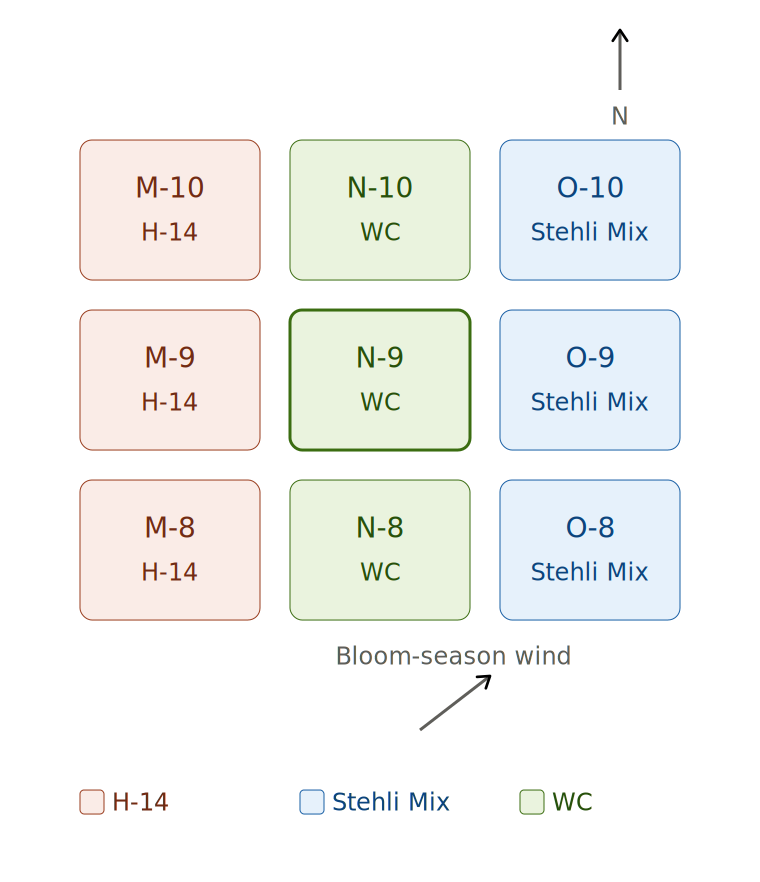
The diagram below shows this tree’s actual neighbors in our orchard, by variety. It’s not lab-confirmed parentage, just a look at what’s genuinely nearby based on distance, but it gives you a sense of the diversity around this tree. When you plant your own seedling, aim for the same setup: at least one other unrelated chestnut tree within about 100 feet.