Eliza (E-11) – Liu seed nuts
The variety
Liu is a red-shelled Chinese chestnut from Ohio, named in honor of the Chinese researcher Liu, and it carries what may be the most commercially useful trait of any chestnut in our orchard.
Greg Miller stores nuts from dozens of cultivars each year for seed. Out of all of them, one stood out with near-zero blossom end rot and near-zero storage rots, two years running. That was Liu.
It is easy to overlook storage in favor of size and sweetness, but Miller describes fungal decay of chestnut kernels as one of the biggest problems the industry faces. Storage quality is what determines whether a nut posted to a customer arrives sound, and whether someone who bought from us in October comes back in November. Nobody markets chestnuts on how well they keep, because almost nobody has the data.
We are testing ours through a full winter before we put any promises in writing.
The tree
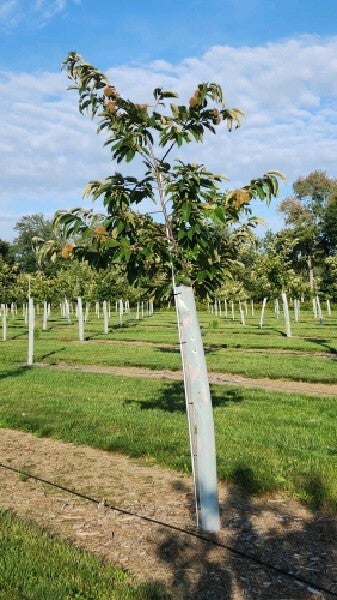
Eliza shows a nice timber form type tree with many colorful red burs spaced equally all through her canopy with a red cluster crown right on top. Liu is not one of our most vigorous growing varieties but this wonderful tree is a treat to have in the orchard and showing great growth. Fantastic red nuts.
Seed nuts from this tree will be available once harvest is in. Join our newsletter to hear first.
New to growing chestnuts? Start here.
*Seedlings may not match their mother tree's form. Why?
Why nearby trees matter
Chestnut trees don’t self-pollinate, each one needs pollen from a different, genetically distinct tree nearby to set a good crop of nuts. That’s cross-pollination, and it’s one of the most important things to plan for when deciding where to plant.
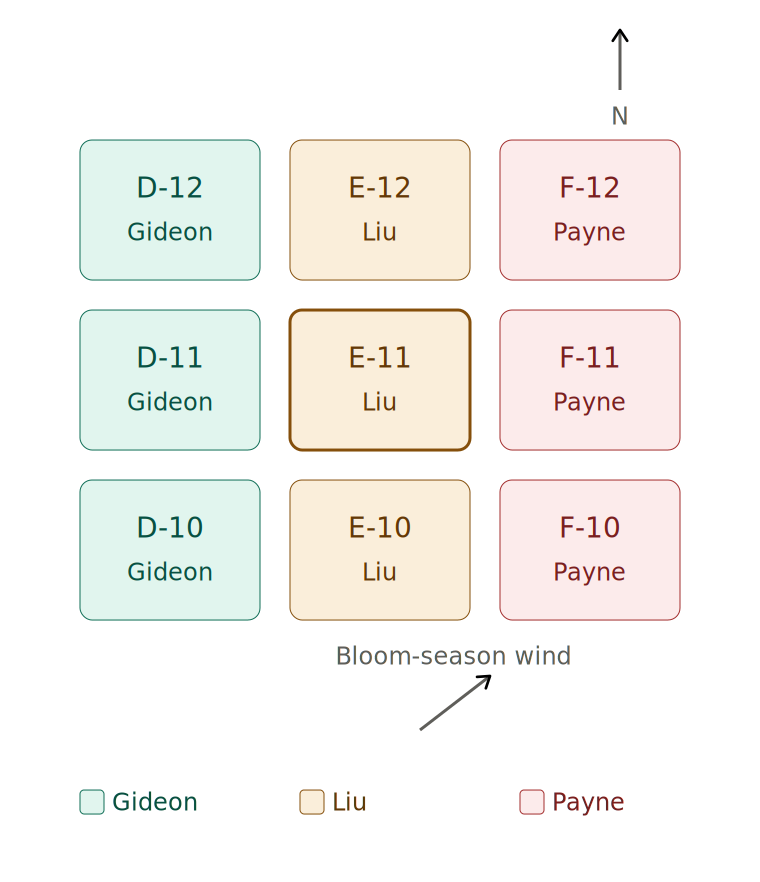
The diagram below shows this tree’s actual neighbors in our orchard, by variety. It’s not lab-confirmed parentage, just a look at what’s genuinely nearby based on distance, but it gives you a sense of the diversity around this tree. When you plant your own seedling, aim for the same setup: at least one other unrelated chestnut tree within about 100 feet.